
Dedekind Cut
Initializing live version


Requires a Wolfram Notebook System
Interact on desktop, mobile and cloud with the free Wolfram Player or other Wolfram Language products.
Dedekind invented cuts to construct the real numbers from the rationals. Another method is to use Cauchy sequences.
[more]


Contributed by: Michael Schreiber (March 2011)
Open content licensed under CC BY-NC-SA
Snapshots
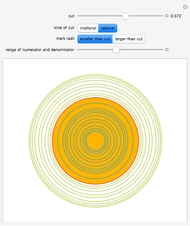
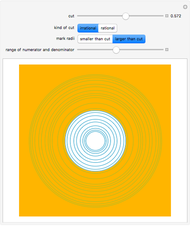

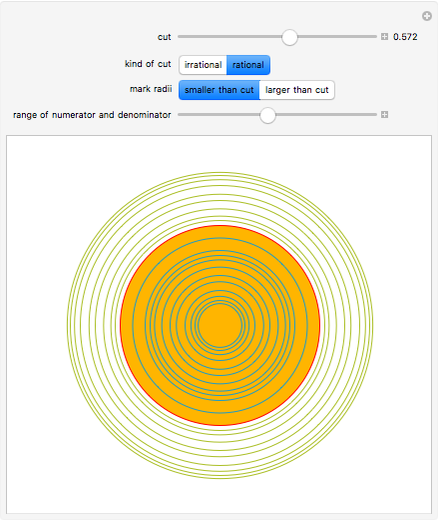
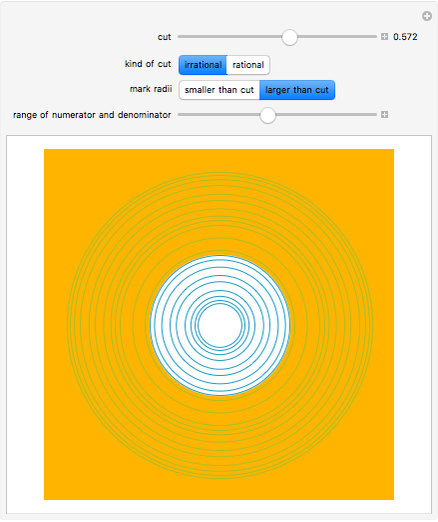
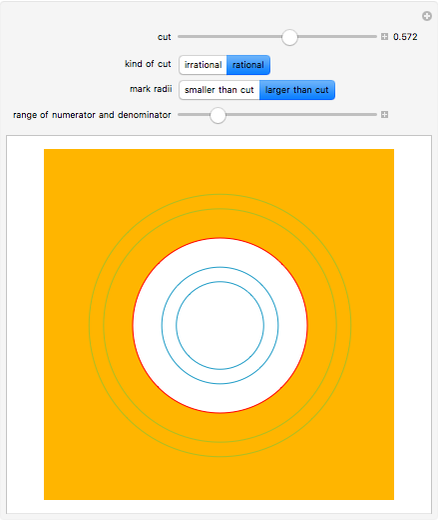
Details
Permanent Citation
Related Demonstrations
More by Author
 Ratio Match
Michael Schreiber Minkowski's Question Mark Function
Oleksandr Pavlyk Copeland-Erdos and Champernowne Numbers for Small Bases
Michael Schreiber MIDI Keyboard Limits
Michael Schreiber Primality Bit Spiral
Michael Schreiber Digit Frequencies in Digit Expansions
Michael Trott Adding and Subtracting Positive and Negative Integers
George Beck A Negative Times a Negative Is Positive
George Beck Cantor Function
Douglas Rivers Scientific Notation
Joe Bolte
-
 Ten Year Calendar
Michael Schreiber -
 Spanning Tree of Points on Sphere
Michael Schreiber -
 Simple Three-Letter Cube
Michael Schreiber -
 Arithmetic Sculpture for Addition and Multiplication
Michael Schreiber -
 Carbon Dating
Michael Schreiber -
 Board Inversion
Michael Schreiber -
 Cylinder Hemisphere Cone
Michael Schreiber -
 Polyhedron Dual
Michael Schreiber -
 Lattice Multiplication
Michael Schreiber -
 Ultimate Tic-Tac-Toe
Michael Schreiber -
 Keccak Cinema Contemplation
Michael Schreiber -
 Xored Keccak States for Steps in Rounds of SHA-3
Michael Schreiber -
 Spirals of Squares
Michael Schreiber -
 Opposite Rotations of Frame Segments
Michael Schreiber -
 Intersecting Circles
Michael Schreiber -
 Abacus
Michael Schreiber -
 Doubling a Distance with a Compass
Michael Schreiber -
 The Cantor Sequence with Bits
Michael Schreiber -
 Diffusion-Limited Clogging
Michael Schreiber -
 Marginal Utility Budget Line
Michael Schreiber