
Wollaston Prism


Requires a Wolfram Notebook System
Interact on desktop, mobile and cloud with the free Wolfram Player or other Wolfram Language products.
A Wollaston prism consists of two right triangle prisms (commonly made of calcite or quartz) cemented together. When the beam passes through the interface, the prism produces two orthogonal linearly polarized divergent beams, the ordinary ray (o ray) and extraordinary ray (e ray). The beams diverge from the prism, giving two polarized rays; their divergence depends on the wedge angle of the prisms.
Contributed by: Enrique Zeleny (March 2012)
Open content licensed under CC BY-NC-SA
Snapshots
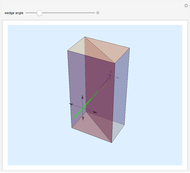
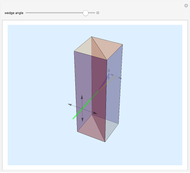
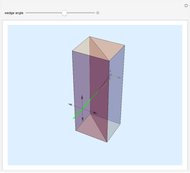
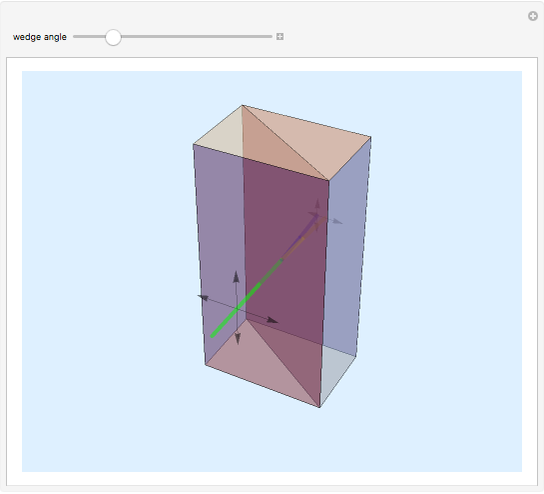
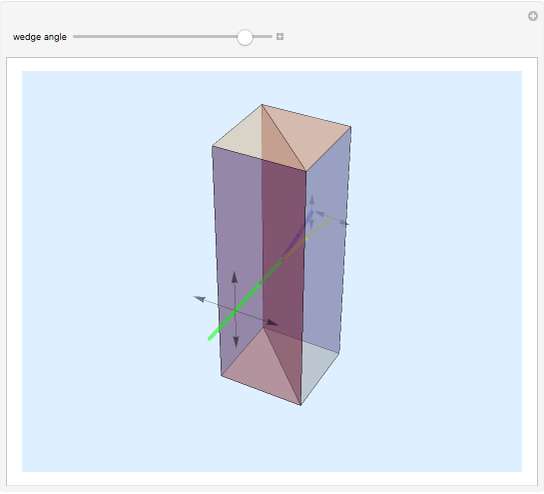
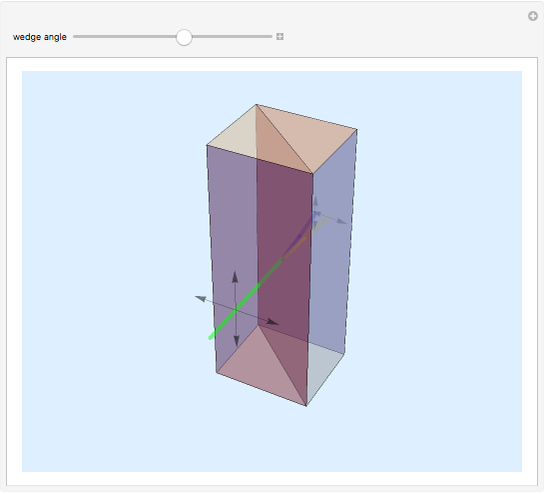
Details
detailSectionParagraphPermanent Citation
"Wollaston Prism"
http://demonstrations.wolfram.com/WollastonPrism/
Wolfram Demonstrations Project
Published: March 9 2012
 Anamorphic Prisms
Ann Williamson and Donald Barnhart (Optica Software, a division of iCyt™ Mission Technology) Constructing a Cassegrain Telescope
Ann Williamson and Donald Barnhart (Optica Software, a division of iCyt™ Mission Technology) Optical Model of the Human Eye
Ann Williamson and Donald Barnhart Hypergeometric-Gaussian Modes
Enrique Zeleny Understanding Polarization with an Analogy
Enrique Zeleny Newton's Color Wheel
Enrique Zeleny Laws of Reflection
Enrique Zeleny Cylindrical Waves Passing through a Double Slit
Enrique Zeleny Solution of a Nonlinear Schrödinger Equation
Enrique Zeleny Mirage
Enrique Zeleny
-
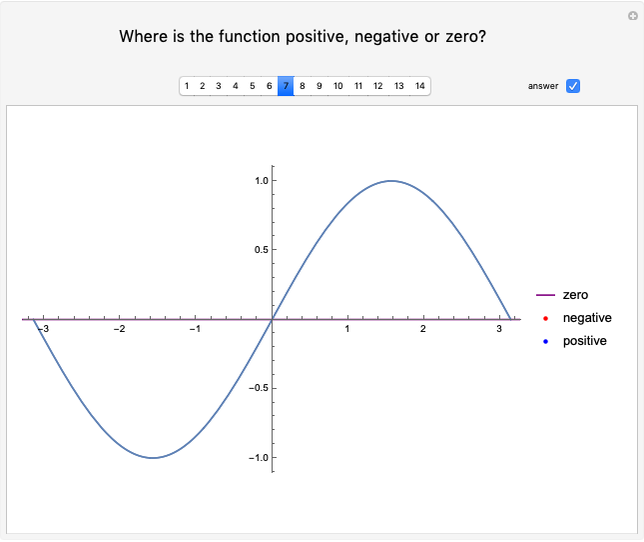 Sign of a Function
Enrique Zeleny -
 Length of the Perpendicular from a Point to a Straight Line
Enrique Zeleny -
 Van de Graaff Generator
Enrique Zeleny -
 Equilibrium of a Suspended Mobile
Enrique Zeleny -
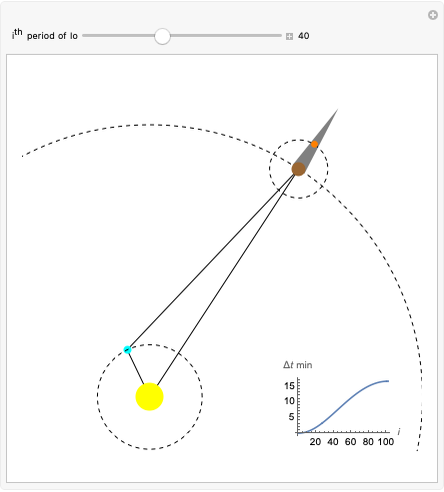 Rømer's Measurement of the Speed of Light
Enrique Zeleny -
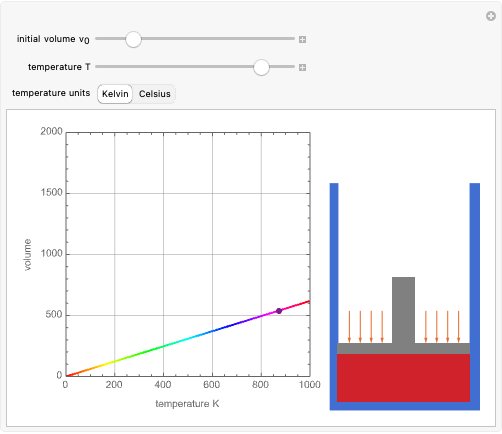 Charles's Law
Enrique Zeleny -
 Forces Acting on a Ladder
Enrique Zeleny -
 Density
Enrique Zeleny -
 Tumor Growth Model
Enrique Zeleny -
 Newton's Second Law
Enrique Zeleny -
 Weight of a Person Riding in an Elevator
Enrique Zeleny -
 Active Shock Absorbers
Enrique Zeleny -
 Bragg's Law
Enrique Zeleny -
 Projectile with Air Drag
Enrique Zeleny -
 Coulomb Wavefunctions
Enrique Zeleny -
 Jorge-Meeks K-Noids
Enrique Zeleny -
 Motion of a Parachuter
Enrique Zeleny -
 Asimov's Ladder of Physical Constants
Enrique Zeleny -
 Solutions of the Elliptic Membrane Problem
Enrique Zeleny -
 Lagrange Points
Enrique Zeleny