
Lensmaker's Equation
Initializing live version


Requires a Wolfram Notebook System
Interact on desktop, mobile and cloud with the free Wolfram Player or other Wolfram Language products.
The lensmaker's equation relates the focal length of a simple lens with the spherical curvature of its two faces:
 ,
where
,
where  and
and
 represent the radii of curvature of the lens surfaces closest to the light source (on the left) and the object (on the right). The sign of
  is determined by the location of the center of curvature along the optic axis, with the origin at the center of the lens. Thus for a doubly convex lens, is positive while is negative.


Contributed by: S. M. Blinder (March 2011)
Open content licensed under CC BY-NC-SA
Snapshots
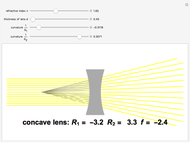
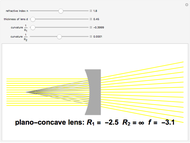
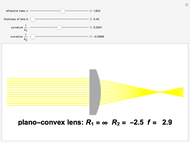
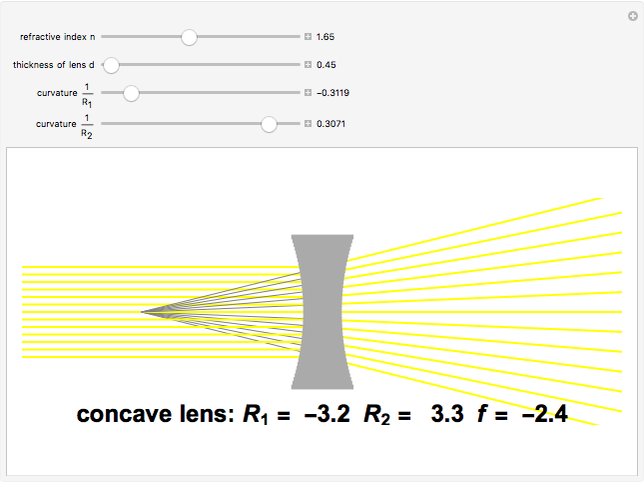
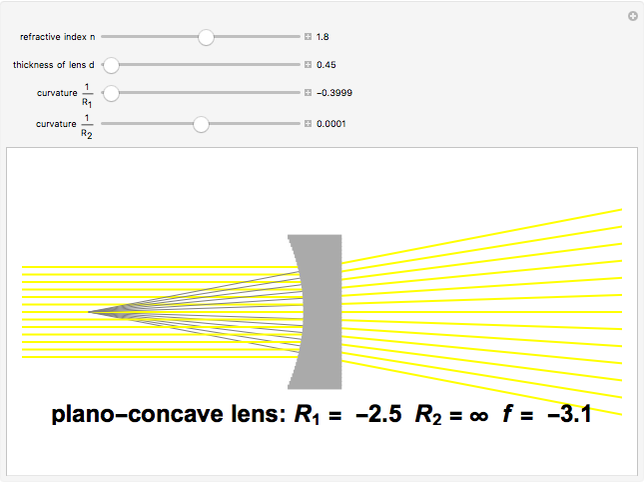
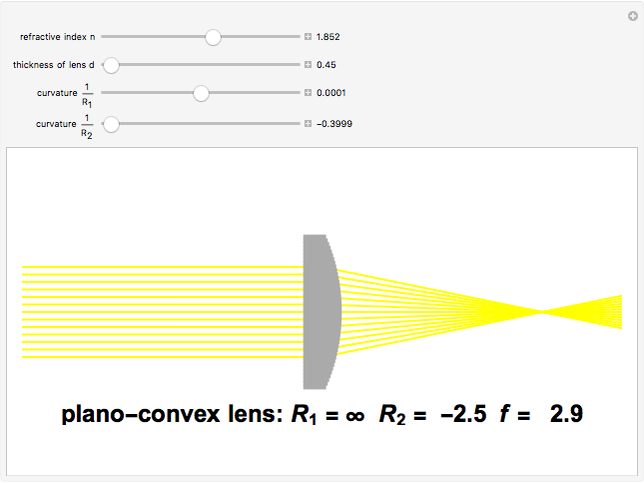
Details
Permanent Citation
Related Demonstrations
More by Author
 Fresnel Equations
Gianni Di Domenico (Université de Neuchâtel) Constructing A Simple Optical System
Ann Williamson and Donald Barnhart (Optica Software, a division of iCyt™ Mission Technology) Applications of Fresnel Equations for Light Intensities
Han Wang Light Refraction with a Waterdrop
Donald Barnhart, developer of Rayica and LensLab Designing Optical Systems
Donald Barnhart, developer of Rayica and LensLab Ray Diagrams for Spherical Mirrors
Ernest Lee Lens Doublets
Ann Williamson and Donald Barnhart Anamorphic Prisms
Ann Williamson and Donald Barnhart (Optica Software, a division of iCyt™ Mission Technology) Constructing a Cassegrain Telescope
Ann Williamson and Donald Barnhart (Optica Software, a division of iCyt™ Mission Technology) Pentaprism
Andrew Wesly, Ann Williamson and Donald Barnhart (Optica Software, a division of iCyt™ Mission Technology)
-
 Ice Cube Melting in Water
S. M. Blinder -
 Absorption Spectroscopy
S. M. Blinder -
 Height of Object from Angle of Elevation Using Tangent
S. M. Blinder -
 Internal Rotation in Ethane and Substituted Analogs
S. M. Blinder -
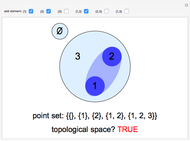 Topological Spaces on Three Points
S. M. Blinder -
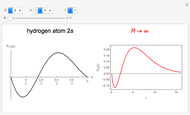 Hydrogen Atom in Curved Space
S. M. Blinder -
 Multipurpose Tool
S. M. Blinder -
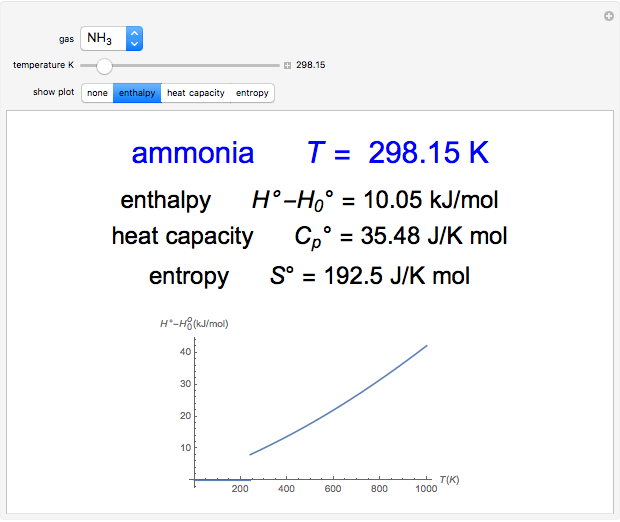 Statistical Thermodynamics of Ideal Gases
S. M. Blinder -
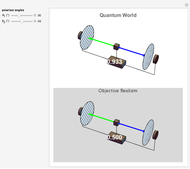 Bell's Theorem
S. M. Blinder -
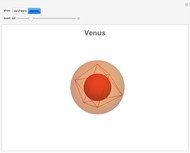 Kepler's Mysterium Cosmographicum
S. M. Blinder -
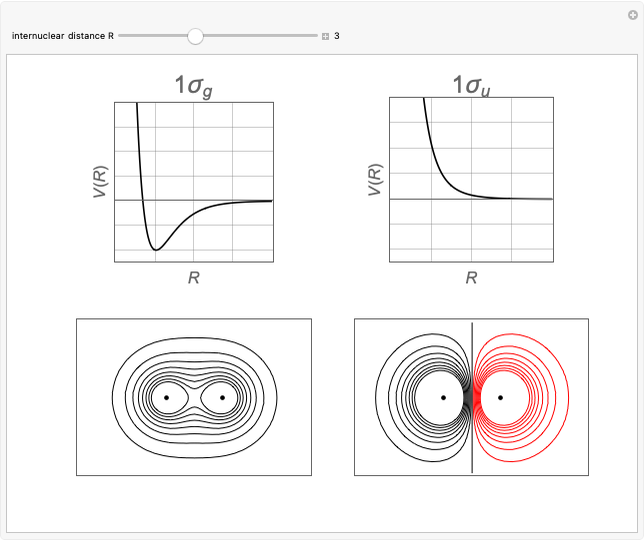 Bonding and Antibonding Molecular Orbitals
S. M. Blinder -
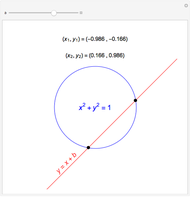 Visible and Invisible Intersections in the Cartesian Plane
S. M. Blinder -
 Heron's Formula
S. M. Blinder -
 How Zippers Work
S. M. Blinder -
 Mittag-Leffler Expansions of Meromorphic Functions
S. M. Blinder -
 Orbital Resonance in the Asteroid Belt
S. M. Blinder -
 Jordan's Lemma Applied to the Evaluation of Some Infinite Integrals
S. M. Blinder -
 Configuration Interaction for the Helium Isoelectronic Series
S. M. Blinder -
 Structure and Bonding of Second-Row Hydrides
S. M. Blinder -
 DNA Base Pairing
S. M. Blinder