
Herd Immunity for Smallpox



Requires a Wolfram Notebook System
Interact on desktop, mobile and cloud with the free Wolfram Player or other Wolfram Language products.
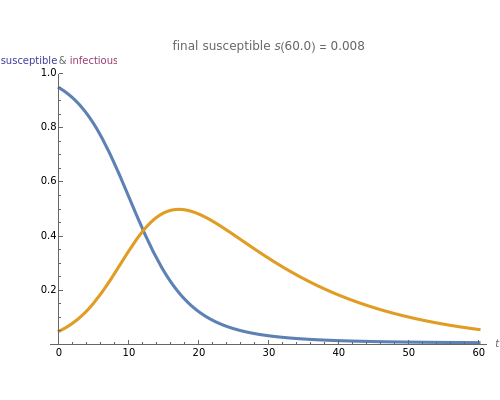
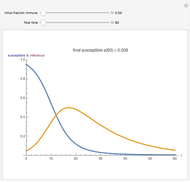
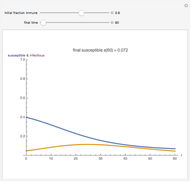
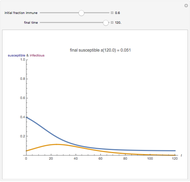
A population has "herd immunity" when the immune population is high enough so that if an infection is introduced, it dies out without building up. You can see this by sliding the initial immune fraction until the red graph does not increase in the illustration for smallpox.
[more]

Contributed by: Keith Stroyan (March 2011)
Open content licensed under CC BY-NC-SA
Snapshots
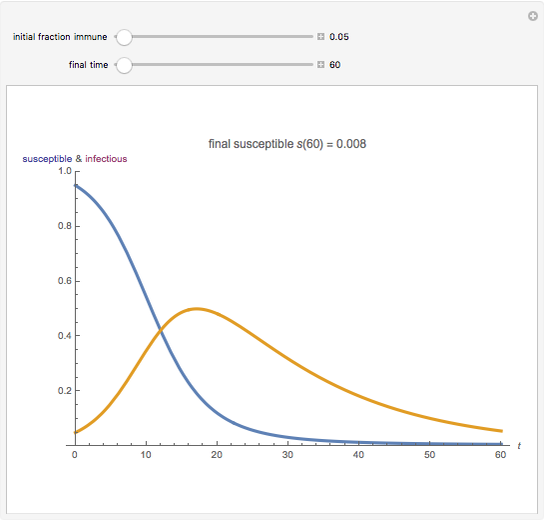
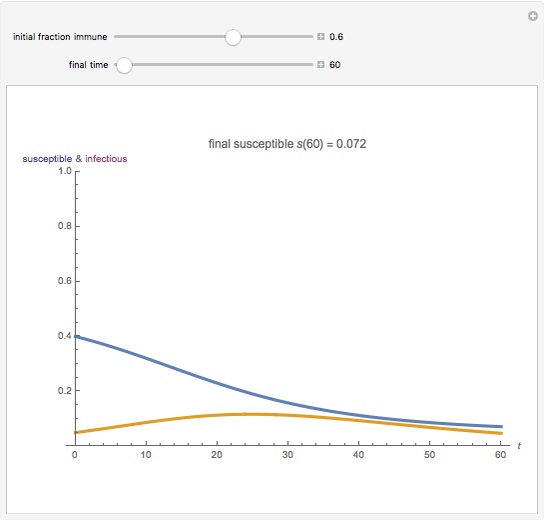
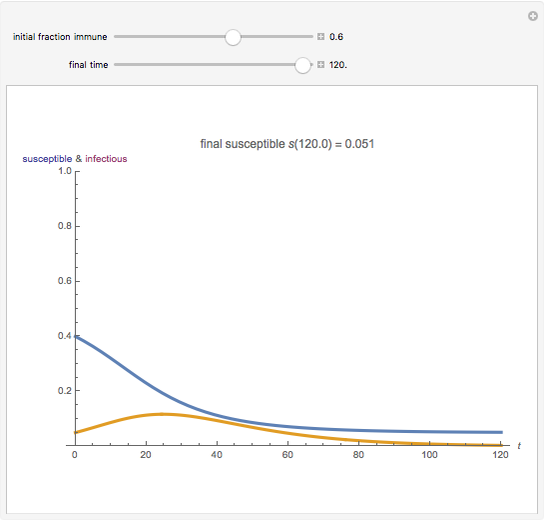
Details
Permanent Citation
"Herd Immunity for Smallpox"
http://demonstrations.wolfram.com/HerdImmunityForSmallpox/
Wolfram Demonstrations Project
Published: March 7 2011
 SIR Epidemic Dynamics
Steve Strain (Department of Biology, Slippery Rock University of Pennsylvania) Vaccinations and Herd Immunity Using the SIR Disease Epidemic Model
Tara Nenninger and Soumyaa Mazumder Spatio-Temporal Epidemic Spread
Jan Baetens Predator-Prey Equations Simulating an Immune Response
Clay Gruesbeck Travel with Waiting Time and Distance Distributions
Seth J. Chandler Life Expectancy in the U.S. Population
Jean Buck and Mike Pilat Mixing and Infection in a Two-Group SIS Model
Segismundo S. Izquierdo, Luis R. Izquierdo and Dunia López-Pintado Spread of Zika in Brazil Using the Ross-MacDonald Model
Jessica Lu and John Kwak Dynamics of Seasonal Epidemics
Clay Gruesbeck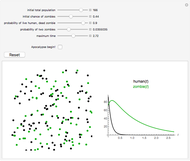 Population Sizes and Interactions during the Zombie Apocalypse
Soumik Biswas and Renata Wettermann
-
Vaccinations and Herd Immunity Using the SIR Disease Epidemic Model
Keith Stroyan -
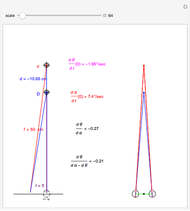 Motion/Pursuit Law in 1D (Visual Depth Perception 1)
Keith Stroyan -
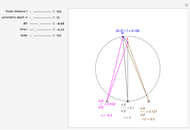 Motion/Pursuit Law on Invariant Circles (Visual Depth Perception 4)
Keith Stroyan -
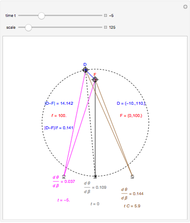 Motion/Pursuit Law in 2D (Visual Depth Perception 3)
Keith Stroyan -
SIR Epidemic Dynamics
Keith Stroyan -
 Dynamic Approximation of Static Quantities (Visual Depth Perception 14)
Keith Stroyan -
 Motion/Pursuit Ratio and Depth in 2D (Visual Depth Perception 18)
Keith Stroyan -
 Motion Parallax versus Depth, 3D (Visual Depth Perception 13)
Keith Stroyan -
 Motion Parallax versus Depth, 2D (Visual Depth Perception 12)
Keith Stroyan -
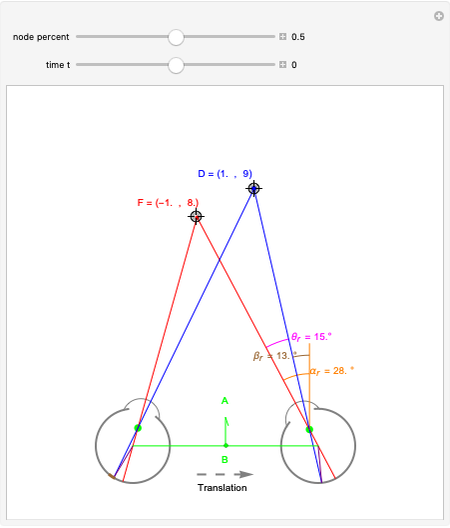 Tracking and Separation (Visual Depth Perception 11)
Keith Stroyan -
 Disparity, Convergence, and Depth (Visual Depth Perception 10)
Keith Stroyan -
 Binocular Disparity versus Depth (Visual Depth Perception 9)
Keith Stroyan -
 Binocular Disparity (Visual Depth Perception 7)
Keith Stroyan -
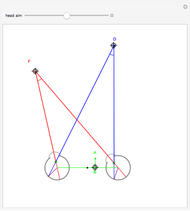 Fixation and Distraction (Visual Depth Perception 5)
Keith Stroyan -
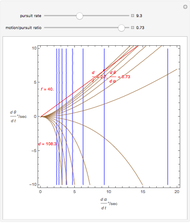 Speed, Pursuit, M/P Ratio, and Depth (Visual Depth Perception 16)
Keith Stroyan -
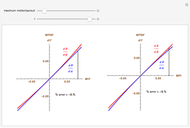 Motion/Pursuit Ratio and Depth in 1D (Visual Depth Perception 17)
Keith Stroyan -
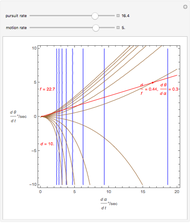 Speed, Motion, Pursuit, and Depth (Visual Depth Perception 15)
Keith Stroyan -
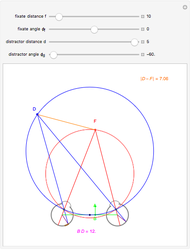 Vieth-Müller Circles (Visual Depth Perception 8)
Keith Stroyan -
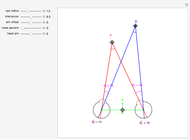 Eye Parameters (Visual Depth Perception 6)
Keith Stroyan -
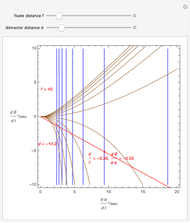 Motion, Pursuit, Fixate, and Distractor (Visual Depth Perception 2)
Keith Stroyan